Marriage is an important step that brings two people together to build a life based on trust, understanding and shared responsibilities. Today, many relationships begin through matrimonial websites, dating platforms, mutual friends or family connections. Although these introductions provide an opportunity to get to know someone, the details shared in a profile or conversation may not always tell the complete story.
Taking time to verify important information before marriage can help individuals make informed decisions and avoid misunderstandings later. A pre-matrimonial background investigation focuses on checking relevant details about a prospective partner through appropriate and lawful methods. The purpose is not to judge someone based on rumours or invade their privacy, but to establish whether important information is accurate.
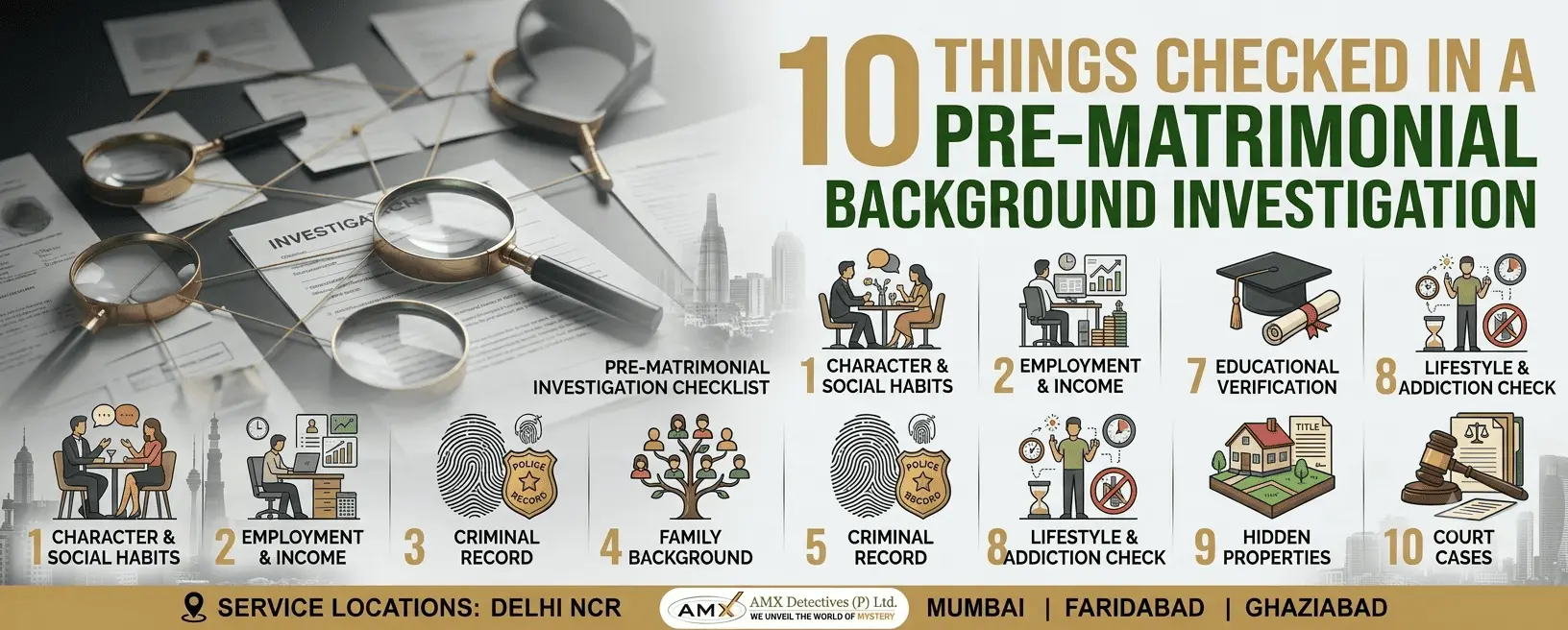
The following 10 key areas can help individuals and families make a more informed decision when considering a matrimonial match.
1. Employment Details and Professional Background
A person’s career often plays an important role in marriage discussions. Information about employment, professional responsibilities and career history can help both partners understand their future plans and expectations.
What can be checked:
- Current employment and professional designation.
- Previous work experience, where relevant.
- Verification of educational qualifications, professional certifications and job-related credentials.
- Employment details that can be verified through authorised sources.
Why it matters:
Any inconsistencies in employment details, job titles or claimed career achievements that may affect mutual trust. Verifying relevant employment details helps establish a clearer picture of someone’s career and encourages honest conversations about future goals.
2. Personal Conduct and General Reputation
The way a person behaves in everyday situations can be an important consideration when choosing a life partner. Conversations, personal interactions and publicly available information may provide useful context, although no single source can fully define someone’s character.
What can be considered:
- Consistency between information shared and verifiable facts.
- Relevant, lawfully obtained information about known disputes or conduct.
- Patterns supported by credible evidence rather than neighbourhood gossip.
- The person’s communication style and approach to relationships, as experienced directly.
Why it matters:
Respect, emotional maturity and the ability to handle disagreements are important in a lasting relationship. If concerns arise, they should be assessed carefully and fairly instead of relying on unverified allegations or assumptions.
3. Financial Information and Financial Responsibilities
Money is an important part of married life, particularly when two people begin planning household expenses, savings, property purchases and other long-term commitments.
What can be checked or discussed:
- Employment income or business earnings disclosed by the individual.
- Ownership of property or other assets, where relevant records are lawfully available.
- Financial obligations and ongoing commitments that the individual is willing or required to share.
- General information about a business’s financial position, where lawful and appropriate verification is possible.
Why it matters:
A person’s financial situation does not determine their worth as a partner. However, significant differences between disclosed information and verified facts can affect future planning. Honest discussions about debts, spending habits, financial responsibilities and expectations can help both partners prepare for married life.
4. Marital Status and Previous Marriages
Marital status is one of the most important details to clarify before proceeding with a marriage. Uncertainty about a previous marriage or an ongoing divorce may have significant personal and legal consequences.
What can be checked:
- Relevant marital-status information.
- Available records relating to a previous marriage or divorce.
- Whether a disclosed divorce has been legally finalised.
- Relevant legal proceedings, where records are accessible through lawful means.
Why it matters:
Both individuals should have an accurate understanding of each other’s marital status before making a commitment. If a previous marriage or divorce raises questions, the details should be clarified through appropriate records and, where necessary, advice from a qualified lawyer.
5. Lifestyle, Habits and Personal Preferences
Differences in lifestyle do not automatically make two people incompatible. However, habits and expectations that affect daily life can become important topics when a couple considers marriage.
What can be discussed or verified appropriately:
- Attitudes towards alcohol, smoking or other personal habits.
- Preferences regarding social activities, holidays, travel and leisure time.
- Daily routines and work-life balance.
- Everyday habits, work schedules and the balance between professional and personal life.
Why it matters:
Compatibility is not about meeting someone else’s ideal standards. It is about understanding whether both people can respect each other’s choices and agree on the way they want to live. Open conversations are generally the best starting point, while any additional verification should remain lawful and proportionate.
6. Family Background and Family Responsibilities
For many couples, marriage also involves building relationships with each other’s families. Understanding family circumstances can help prospective partners discuss expectations before making a long-term commitment.
What can be considered:
- Family information voluntarily shared during the matrimonial process.
- Relevant, verifiable details about a family business or professional background.
- Expectations concerning living arrangements and family responsibilities.
- Known financial or caregiving commitments that may affect married life.
Why it matters:
Every family has its own traditions, responsibilities and ways of managing relationships. Learning about these differences can help a couple discuss practical matters early. A family’s reputation alone should never be treated as proof of an individual’s character, and unverified community rumours should not influence decisions unfairly.
7. Educational Qualifications and Professional Certifications
Education details may be important when a prospective partner has shared particular qualifications or professional achievements as part of a matrimonial profile.
What can be checked:
- The name of the educational institution attended.
- Degrees and qualifications disclosed by the individual.
- Professional certifications relevant to their stated occupation.
- Information confirmed through authorised institutions or recognised verification channels.
Why it matters:
Accurate educational information helps ensure that important claims are represented honestly. If a qualification is relevant to employment or future plans, verifying it through appropriate sources can resolve doubts before they become a larger issue.
8. Relevant Legal History and Public Court Records
Legal concerns may sometimes arise during a matrimonial background review. Any such information must be handled carefully because an allegation, complaint or pending case does not automatically establish that a person has committed an offence.
What may be reviewed where legally accessible:
- Relevant public court records.
- Disclosed legal proceedings that have a legitimate bearing on the decision.
- The status and outcome of relevant cases.
- Information that can be confirmed through authorised and reliable sources.
Why it matters:
Reliable information can help individuals understand circumstances that may affect their decisions. Findings should be checked for accuracy, context and current status. Criminal-record checks must follow applicable rules, and no one should be labelled guilty simply because an allegation or case exists.
9. Public Online Information and Social Media
Social media profiles and public online activity may provide additional context about information someone has shared. However, online posts can be incomplete, outdated or misleading, so they should not be treated as definitive evidence of a person’s private life.
What can be reviewed appropriately:
- Public professional profiles and stated qualifications.
- Information voluntarily shared on publicly accessible accounts.
- Obvious inconsistencies between public claims and information provided directly.
- Public statements relevant to a specific, legitimate concern.
Why it matters:
Online information may help identify questions that need clarification, but it cannot reliably establish someone’s complete character or relationship history. Fake profiles, impersonation and misleading content are also possible. Any review should respect privacy and avoid unauthorised account access, impersonation or intrusive monitoring.
10. Health Information and Important Personal Disclosures
Health is a sensitive subject that deserves respect, honesty and informed consent. Some health-related matters may be important to prospective partners, particularly when they affect shared responsibilities or future family planning.
What can be discussed:
- Health information that either partner considers important to disclose.
- Medical concerns relevant to shared decisions, discussed voluntarily.
- Family-planning expectations and questions about future care.
- The need for appropriate medical advice when either person has concerns.
Why it matters:
A healthy relationship depends on mutual respect, understanding and informed decisions. Medical information should not be accessed or investigated without appropriate legal grounds and consent. Rather than relying on assumptions about a person’s health, prospective partners should discuss important concerns openly and consult qualified healthcare professionals when necessary.
Pre-Matrimonial Investigation Services Across Major Indian Cities
The requirements of a matrimonial background check can vary depending on the person’s location, the information that needs to be verified and the availability of reliable records. Local knowledge may help identify appropriate verification channels, but every investigation should follow applicable laws and respect personal privacy.
AMX Detectives provides information about investigation services in several locations, subject to service availability and the requirements of each assignment.
- Delhi NCR: Explore our private investigation services in Delhi NCR for relevant matrimonial and personal verification enquiries.
- Noida: Visit our Detective Agency in Noida page for location-specific service information.
- Gurgaon: Learn more about investigation support through our Detective Agency in Gurgaon
- Mumbai: Contact AMX Detectives to enquire about the availability of matrimonial and background verification services in Mumbai.
- Faridabad: Visit our Detective Agency in Faridabad page for further details.
- Ghaziabad: Explore our Detective Agency in Ghaziabad page for information about local investigation services.
Before choosing an agency, ask about its experience, verification methods, fee structure, reporting process and approach to confidentiality. Confirm that the proposed work can be carried out lawfully and that the agency does not promise results it cannot guarantee.
Final Thoughts
A pre-matrimonial background investigation can help clarify important details before two people make a lifelong commitment. It should not replace honest conversations, mutual understanding or the time needed to build a relationship. Instead, appropriate verification can help address specific concerns and support better-informed decisions.
The most useful checks are those that focus on relevant facts, rely on credible information and respect the rights of everyone involved. Employment, education, marital status and other important details should be assessed fairly, without treating rumours or unverified claims as established facts.
Ultimately, a strong marriage begins with honesty, respect and shared expectations. Taking a thoughtful approach to verification can help prospective partners enter this important stage of life with a clearer understanding of one another and greater confidence in their decisions.